


Is Expensive Mahjong Worth the Cost?
Table of Contents
- What Makes Expensive Mahjong Sets Different
- Mahjong Tile Material Comparison: What You're Actually Buying
- What to Look for in a Mahjong Set Before You Buy
- Entry-Level vs. Luxury Tile Sets: An Honest Comparison
- Resale Value, Longevity, and the Investment Case for Expensive Mahjong
- How to Care for Mahjong Tiles to Protect Your Investment
- Who Should Buy a Premium Mahjong Set?
- Conclusion
Last Updated: August 26, 2026
What Makes Expensive Mahjong Sets Different
The question of whether expensive mahjong is worth the cost comes down to one thing most buyers overlook: you're not just buying tiles. A premium mahjong set is a complete playing system, engineered for both beauty and performance. The difference shows up in the weight of each tile, the precision of every engraving, and the satisfying shuffle sound that fills the room during play. Budget sets cut corners on exactly these details, and those shortcuts compound over time.
Essential Components of a Complete Set
A complete mahjong set includes 144 tiles (or 152 with jokers), racks, pushers, dice, and typically a carrying case. Higher-end sets often include wind indicator discs, scoring chips, and a dedicated mat. The quality of each component matters. Cheap racks warp, thin cases crack, and dice with shallow markings become unreadable after extended use. A well-constructed set treats every accessory as part of the experience.
Craftsmanship and Engraving Quality
The engraving on a tile is where craftsmanship becomes visible. On entry-level sets, characters are stamped or printed and fade over time. On well-made tiles, engraving is cut deep and filled with pigment that holds its color through years of play. Hand-crafted designs carry visual consistency that mass-produced tiles cannot replicate. Each tile should read instantly from playing distance. Poor engraving creates ambiguity during fast play, frustrating both experienced players and beginners.
Mahjong Tile Material Comparison: What You're Actually Buying
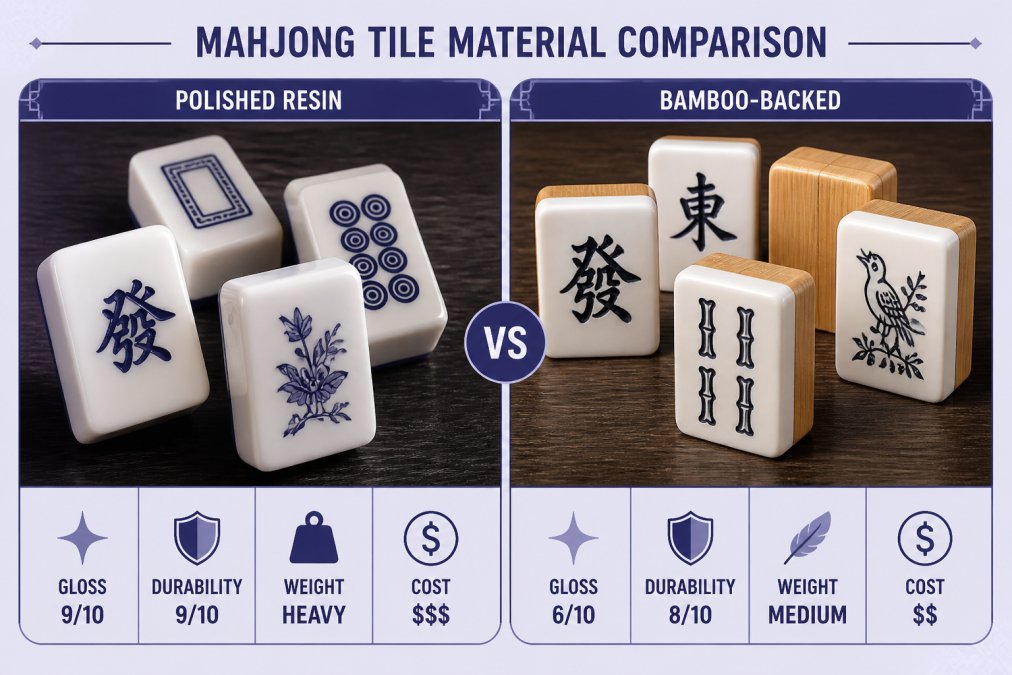
Material composition is the single biggest driver of price variation in a mahjong tile set.
Resin and Acrylic: The Modern Standard
Resin tiles are the dominant material in mid-range and luxury sets today. High-density resin produces excellent weight distribution, satisfying tactile feedback when shuffled, and strong resistance to chipping. Acrylic tiles occupy the lower end, lighter and thinner, producing a sharper sound when shuffled. Many players prefer resin for extended sessions.
The best resin sets use uniform material composition throughout, not a resin shell over a hollow core. According to the Smithsonian's materials science resources, dense polymer composites resist impact fracture significantly better than hollow-cast equivalents, a principle that applies directly to tile construction.
Bamboo, Bone, and Ivory-Substitute Tiles
Traditional mahjong tiles were made with bamboo backs and bone or ivory faces. Genuine antique sets are collector pieces valued for their history and tactile warmth. Bamboo backing gives the tile a natural grip that synthetic materials approximate but don't fully replicate.
Ivory-substitute materials, sometimes called celluloid or French ivory, were the transitional material of the mid-20th century. These tiles age beautifully but require careful maintenance to avoid cracking in dry environments. For most buyers, high-density resin represents the best balance of durability, aesthetic appeal, and value. Bamboo-backed sets are worth pursuing if you value traditional design and tactile authenticity.
What to Look for in a Mahjong Set Before You Buy
Most buyers focus on visual appeal and overlook the performance characteristics that determine whether a set stays enjoyable after the first month.
Tactile Feedback, Weight Distribution, and Shuffle Sound
The tactile experience of a mahjong tile directly affects gameplay. Tiles that are too light slide unpredictably during shuffling; tiles that are too heavy cause hand fatigue. A well-balanced tile sits naturally in the hand and stacks cleanly on the rack without tipping.
Weight distribution should be consistent across all 144 tiles. The shuffle sound test is simple: cup a handful of tiles and shuffle them together. Quality resin and bone tiles produce a low, resonant sound. Hollow or low-density tiles produce a thin, plastic-y clatter. As the American Mah Jongg Association's player resources notes, tile consistency is one of the most common complaints among players who buy sets without handling them first.
Standardized Sizing and Accessibility
Standardized sizing matters more than most buyers realize. Tiles that deviate from standard dimensions don't rack cleanly, disrupting the rhythm of play. For players with arthritis or limited dexterity, tile size and grip texture become accessibility considerations. Larger tiles are genuinely easier to grip and read quickly. Look for sets with tiles measuring at least 30mm in height and clearly differentiated suit markings.
| What to Evaluate | What to Look For | Why It Matters |
|---|---|---|
| Tile weight | Consistent across all 144 tiles | Uneven weight signals poor quality control |
| Engraving depth | Deep-cut, pigment-filled characters | Shallow stamping fades and chips over time |
| Material density | No flex when pressed at corners | Hollow tiles chip and crack faster |
| Rack stability | Tiles stand without tipping | Warped racks disrupt play and frustrate guests |
| Shuffle sound | Low, resonant clatter | Thin sound indicates hollow or lightweight tiles |
| Tile dimensions | Standardized, consistent sizing | Non-standard tiles don't rack cleanly |
Entry-Level vs. Luxury Tile Sets: An Honest Comparison
Entry-level sets serve a purpose for learning players or one-time events. The problem arises when buyers expect entry-level performance from entry-level prices. The most common failure points in budget sets are shallow engraving that fades, lightweight tiles that shift during play, racks that warp after storage, and inadequate carrying cases. Luxury sets address all these failure points by design, using denser material, deeper engraving, and tighter quality control.
The honest comparison: a budget set costs less upfront and more over five years. A luxury set costs more upfront and often nothing more for a decade or longer.
Resale Value, Longevity, and the Investment Case for Expensive Mahjong
A well-made mahjong set retains value in a way that almost no other tabletop game product does. Vintage bone-and-bamboo sets from the early-to-mid 20th century routinely sell for multiples of their original retail price. According to auction records and collector pricing guides at Invaluable, antique mahjong sets in excellent condition consistently attract serious collector interest.
Modern luxury sets made with quality materials and authentic hand-crafted design follow a similar trajectory. Sets that are well-maintained and come from makers committed to craftsmanship hold their value. Longevity is the more immediate investment argument. A quality resin or bone-and-bamboo set, properly cared for, lasts decades. The per-use cost of a set played once a month for twenty years is negligible compared to replacing a budget set every two to three years. Maintenance costs for premium sets are low: occasional cleaning, proper storage, and protection from extreme temperature changes.
How to Care for Mahjong Tiles to Protect Your Investment
Proper care for mahjong tiles is simple but specific. The biggest mistakes are using wrong cleaning agents and storing tiles in conditions that cause warping or cracking.
Cleaning:
- Wipe tiles with a soft, slightly damp cloth after play
- Never submerge tiles in water or use abrasive cleaners
- For resin tiles, mild dish soap on a cloth is safe; rinse before wiping
- For bone or ivory-substitute tiles, use a dry or barely damp cloth only
Storage:
- Store tiles in their case or padded container that prevents movement
- Avoid storage in areas with significant temperature swings
- Keep tiles out of direct sunlight, which fades engraved characters
- Place a small silica gel packet in the case for extended storage
Handling:
- Shuffle on a soft mat rather than a bare table to prevent edge chipping
- Avoid dropping tiles on hard floors
- Inspect tiles periodically for engraving wear or surface damage
Who Should Buy a Premium Mahjong Set?
Not everyone needs a luxury mahjong set, but the list of people who genuinely benefit from one is longer than most assume.
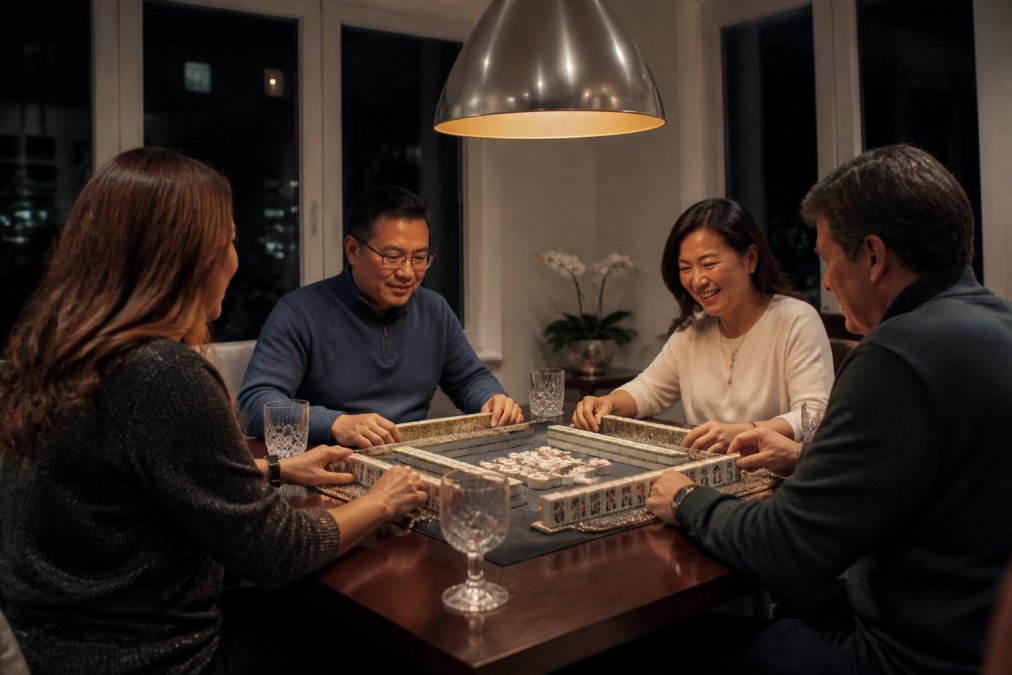
A premium set makes sense if you fall into any of these categories:
- Regular hosts: If you play once a month or more, the quality difference compounds. Your guests notice the tiles, the sound, the experience.
- Gift-givers: For weddings, milestone birthdays, or housewarmings, a beautifully crafted tile set is a gift that lasts decades and carries genuine sentimental weight.
- Players with accessibility needs: Larger, heavier tiles with deep engraving are genuinely easier to handle for players with arthritis or limited grip strength.
- Collectors: A well-made set with authentic craftsmanship is a collector piece from the moment you buy it.
- Anyone who has already replaced a budget set: If you've been disappointed before, you already know what the upgrade costs.
Casual players who host occasionally and want something beautiful for their space will also appreciate the quality. The idea that premium sets are "overkill" for casual play misunderstands what makes them worth buying.
The real cost of an inexpensive mahjong set isn't the purchase price. It's the cumulative disappointment of tiles that chip, racks that warp, and a playing experience that never quite delivers what the game deserves. Mahjong Montage offers a curated selection of premium tile sets, racks, and mats designed to be cherished for generations, with a firm commitment to authentic, hand-crafted design and zero tolerance for AI-generated aesthetics. If you're ready to invest in a set that rewards every session, shop now and find the tile set that matches your game.
Frequently Asked Questions
Why are some mahjong sets so expensive?
Price reflects material quality, manufacturing method, and what's included in the set. Handcrafted tiles with deep engraving, high-density resin or traditional bamboo construction, and full accessories like racks, pushers, jokers, flowers, and a carrying case all add to the cost. Mass-produced sets cut corners on material composition and quality control, which shows up quickly in chipping, fading, and uneven weight distribution. A higher price typically signals a tile set built to last years of regular play rather than a season.
What materials make a mahjong set high-quality?
The best mahjong tile sets use high-density resin or acrylic for consistent weight distribution and durability, or traditional materials like bamboo-backed tiles for a classic tactile feel. Quality control matters as much as the raw material: tiles should be uniform in size, feel solid without being brittle, and produce a satisfying shuffle sound. Deep engraving that won't wear smooth with regular play is a reliable indicator of craftsmanship. Avoid sets where the printed or painted design sits only on the surface.
Does it matter which mahjong set you buy for casual game nights?
For monthly hosting, the quality of your tile set shapes the entire experience. Entry-level sets often develop chips and rough edges within a year of regular use, which affects both gameplay and aesthetics. A well-made set with good tactile feedback and clear, durable engraving makes the game more enjoyable for every player at the table. If you're investing in a set you'll use for years and display between games, the difference in quality becomes obvious quickly. Casual players often find they appreciate premium sets more than they expected.
How do I distinguish between mass-produced and artisan mahjong tiles?
Check the engraving depth: artisan tiles have characters and symbols cut or pressed deeply into the tile face so they remain crisp after years of play. Mass-produced tiles often use surface printing that fades or chips. Weight uniformity matters too, hold several tiles from the same set and compare them. Artisan sets also show intentional design choices in the artwork on jokers and flower tiles rather than generic clip art. Packaging quality, included accessories, and whether the design was created by a human designer are all reliable signals.
This article was written using GrandRanker